World Cup Ultimate Guide
The FIFA World Cup is the most prestigious soccer tournament in the world and one of the largest sporting events ever created. Every four years, the world’s best football teams compete for the famous World Cup trophy while billions of fans watch from every corner of the globe.
With the arrival of the expanded World Cup 2026 tournament, interest in the competition has reached new heights. The 2026 edition will feature 48 national teams, 104 matches, and host cities spread across Canada, Mexico, and the United States.
This World Cup Ultimate Guide answers the most common questions about the tournament, its history, format, qualification process, host cities, and fascinating facts.
How Often is the World Cup and More World Cup Questions Answered
The FIFA World Cup takes place every four years. The tournament brings together the best football teams from around the world after a lengthy qualification process involving six continental confederations.
The World Cup is considered the pinnacle of international soccer and is often regarded as the most watched sporting event on the planet.
What is the World Cup?
The FIFA World Cup is an international soccer tournament organized by FIFA. National teams compete to determine the world champion.
Since its creation in 1930, the tournament has grown into a global phenomenon attracting billions of viewers and generating enormous economic and cultural impact.
The competition features group stage matches followed by knockout rounds, culminating in the World Cup final match.
How Often is the World Cup?
The men’s FIFA World Cup is held every four years.
This schedule allows national teams sufficient time to participate in qualification tournaments and regional competitions while maintaining the prestige of the event.
The Women’s World Cup is also held every four years but on a separate cycle.
How Did the World Cup Start?
The inaugural tournament took place in Uruguay in 1930.
The competition was the vision of FIFA president Jules Rimet, who wanted to create a worldwide championship for national teams.
Uruguay hosted the first tournament and defeated Argentina in the final to become the first World Cup champion.
Why is the World Cup Every Four Years?
The four-year cycle allows players to compete in domestic leagues, continental championships, and qualification tournaments.
Organizing a global tournament involving dozens of nations, thousands of staff members, and millions of fans requires extensive planning and infrastructure development.
The four-year gap also helps maintain excitement and anticipation.
How Many World Cups Have There Been?
From 1930 through 2022, twenty-two FIFA World Cup tournaments were completed.
The 2026 World Cup will become the twenty-third edition of the tournament and the largest in history.
Only two scheduled tournaments were canceled due to World War II:
- 1942
- 1946
Who Won the World Cup in 2022?
The 2022 FIFA World Cup was held in Qatar.
Argentina defeated France in one of the most dramatic finals ever played.
After a 3-3 draw following extra time, Argentina won the championship through a penalty shootout.
The victory secured Argentina’s third World Cup title.
How is the World Cup Different to Soccer at the Summer Games?
The FIFA World Cup is considered the premier international football competition.
Olympic soccer differs in several ways:
- Men’s teams have age restrictions.
- Most squads are under-23 teams with limited overage players.
- The World Cup features full senior national teams.
- The World Cup receives significantly more global attention.
Because of these differences, winning the World Cup is generally regarded as the highest achievement in international football.
What Country Has Won the Most World Cups?
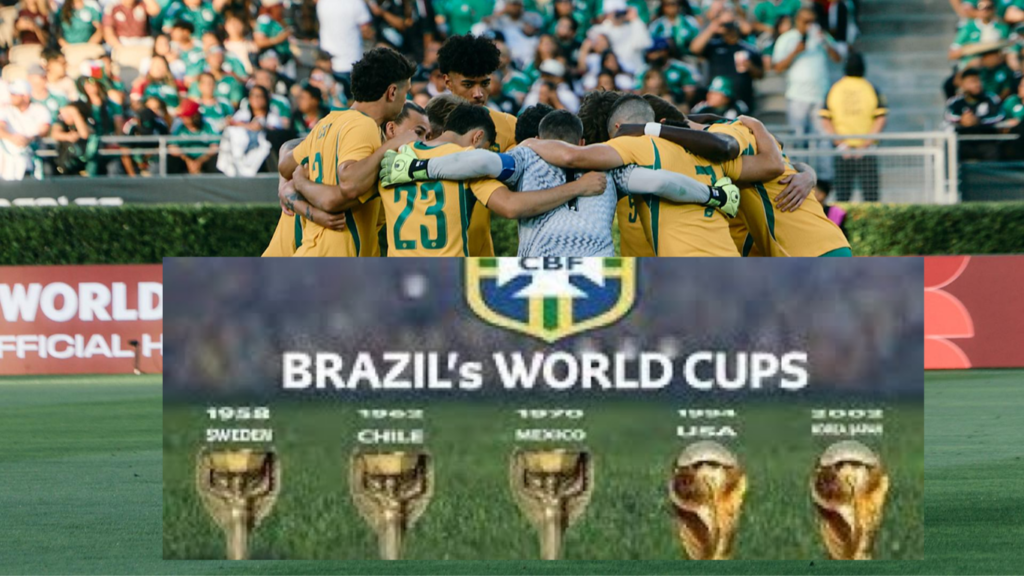
Brazil holds the record for the most World Cup titles.
Brazil’s World Cup Titles
- 1958
- 1962
- 1970
- 1994
- 2002
Total Titles: 5
Brazil remains the only nation to participate in every World Cup tournament.
How Many Times Has the USA Won the World Cup?
The United States men’s national team has never won the FIFA World Cup.
Its best performance came in 1930 when it reached the semifinals.
However, the United States has become one of the most important nations in global soccer and will co-host the World Cup 2026.
What Are the World Cup Qualifying Groups?
World Cup qualifying groups are regional competitions organized by FIFA’s continental confederations.
These confederations include:
- UEFA (Europe)
- CONMEBOL (South America)
- CONCACAF (North America)
- AFC (Asia)
- CAF (Africa)
- OFC (Oceania)
Each confederation receives a specific number of qualification places.
When Are the World Cup Qualifiers?
Qualification matches typically begin approximately three years before the tournament.
For World Cup 2026, qualification competitions have taken place across multiple continents over several years.
The qualification process determines which national teams advance to the final tournament.
How Many Teams Go Through in World Cup Qualifiers?
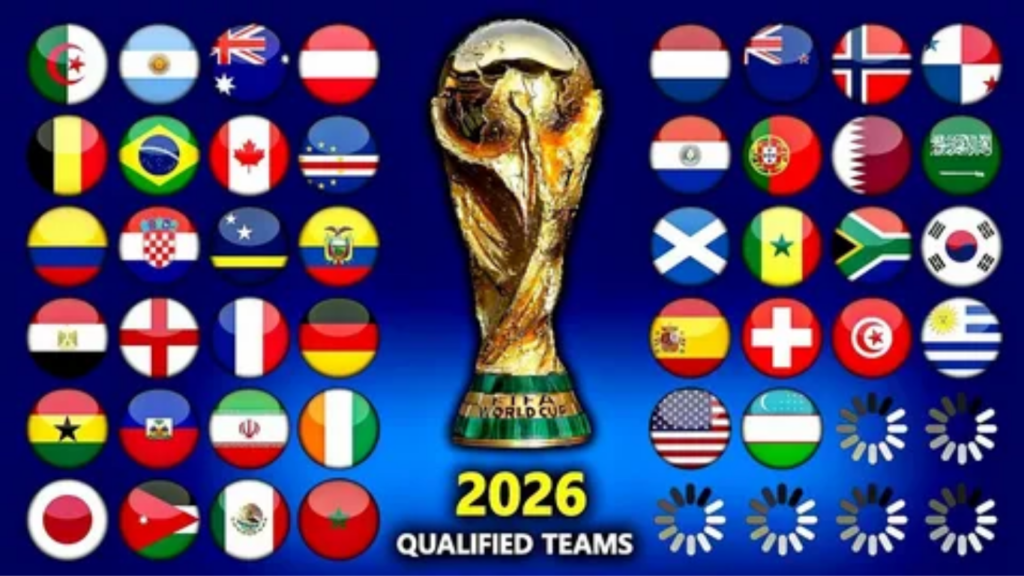
The World Cup 2026 expansion increased participation from 32 teams to 48 teams.
Qualification slots are distributed among FIFA’s six confederations.
This expansion provides more opportunities for emerging football nations to participate on the global stage.
How Does World Cup Qualifying Work?
Teams compete in qualifying matches against opponents from their own confederation.
Qualification systems vary by region but generally involve:
- Group stages
- League formats
- Home-and-away matches
- Playoff rounds
- Intercontinental playoffs
The highest-performing teams secure a place in the World Cup.
How Does USA Qualify for the World Cup?
As one of the host nations, the United States automatically qualified for World Cup 2026.
The same automatic qualification applies to:
- Canada
- Mexico
These three nations will participate without needing to compete in qualification matches.
List of All World Cup Winners
| Year | Winner |
|---|---|
| 1930 | Uruguay |
| 1934 | Italy |
| 1938 | Italy |
| 1950 | Uruguay |
| 1954 | Germany |
| 1958 | Brazil |
| 1962 | Brazil |
| 1966 | England |
| 1970 | Brazil |
| 1974 | Germany |
| 1978 | Argentina |
| 1982 | Italy |
| 1986 | Argentina |
| 1990 | Germany |
| 1994 | Brazil |
| 1998 | France |
| 2002 | Brazil |
| 2006 | Italy |
| 2010 | Spain |
| 2014 | Germany |
| 2018 | France |
| 2022 | Argentina |
When is the Next World Cup?
The next FIFA World Cup begins in June 2026.
The tournament will conclude in July 2026 and is expected to become the largest sporting event ever hosted in North America.
Where is the World Cup in 2026 and What are the 2026 World Cup Host Cities and Stadiums?
The FIFA World Cup 2026 will be jointly hosted by three countries:
- United States
- Canada
- Mexico
This marks the first time in World Cup history that three nations will host the tournament together.
2026 World Cup Host Cities
United States Host Cities
- New York/New Jersey
- Dallas
- Houston
- Atlanta
- Los Angeles
- Philadelphia
- Seattle
- San Francisco Bay Area
- Miami
- Boston
- Kansas City
Canada Host Cities
- Toronto
- Vancouver
Mexico Host Cities
- Mexico City
- Guadalajara
- Monterrey
Famous World Cup Stadiums
Some of the most anticipated stadiums include:
- Estadio Azteca (Mexico City)
- MetLife Stadium (New York/New Jersey)
- AT&T Stadium (Dallas)
- Arrowhead Stadium (Kansas City)
- BC Place (Vancouver)
- BMO Field (Toronto)
The World Cup final match is scheduled to be played at MetLife Stadium in New York/New Jersey.
How Are World Cup Host Countries Chosen?
FIFA selects host countries through a competitive bidding process.
Countries submit proposals detailing:
- Stadium infrastructure
- Transportation networks
- Accommodation capacity
- Security plans
- Fan experience initiatives
FIFA then evaluates each bid before selecting the winning host nation or nations.
What is the Format of the 2026 World Cup Tournament?
The World Cup 2026 format is significantly larger than previous editions.
Key features include:
- 48 national teams
- 12 groups
- 104 matches
- Expanded knockout rounds
Tournament Structure
- Group Stage
- Round of 32
- Round of 16
- Quarterfinals
- Semi-finals
- Third Place Match
- World Cup Final Match
The top teams from each group advance to the knockout rounds.
How Many Matches Are Played in the World Cup?
The FIFA World Cup 2026 will feature:
104 Matches
This is the highest number of matches ever played in a World Cup tournament.
The expanded format allows more teams and more exciting games for fans worldwide.
How Many Teams Play in the World Cup?
The 2026 tournament will feature:
48 National Teams
This is an increase from the previous format of 32 teams.
The expansion gives more countries from Africa, Asia, North America, and Oceania the opportunity to compete on the world’s biggest football stage.
What Do You Get for Winning the World Cup?
Winning the FIFA World Cup brings enormous rewards.
Champions receive:
- The World Cup Trophy
- Prize Money
- Global Recognition
- Historical Legacy
- National Pride
Winning a World Cup often transforms players into national heroes.
How Was the World Cup Trophy Made?
The current FIFA World Cup Trophy was introduced in 1974.
Interesting facts about the trophy:
- Made from 18-carat gold
- Weighs approximately 13.5 pounds (6.1 kg)
- Features two human figures holding up the Earth
The original trophy remains under FIFA ownership.
Winning teams receive a gold-plated replica rather than keeping the original trophy permanently.
What Happens if There Is a Tie in a World Cup Match?
Group Stage
If a match ends level after 90 minutes:
- Both teams receive one point.
- No extra time is played.
Knockout Rounds
If scores are tied:
- Extra Time (30 minutes)
- Penalty Shootout (if necessary)
This system ensures that a winner is determined.
What Is the Format of a World Cup Match?
A standard World Cup match consists of:
- Two halves
- 45 minutes per half
- Halftime break
- Stoppage time added by the referee
Total playing time is generally around 90 minutes plus added time.
How Long Is the World Cup Final Match?
The World Cup final follows the same structure as other knockout matches.
If tied after 90 minutes:
- 30 minutes of extra time
- Penalty shootout if required
Some of the greatest moments in football history have occurred during World Cup finals.
How Big Is a World Cup Soccer Field?
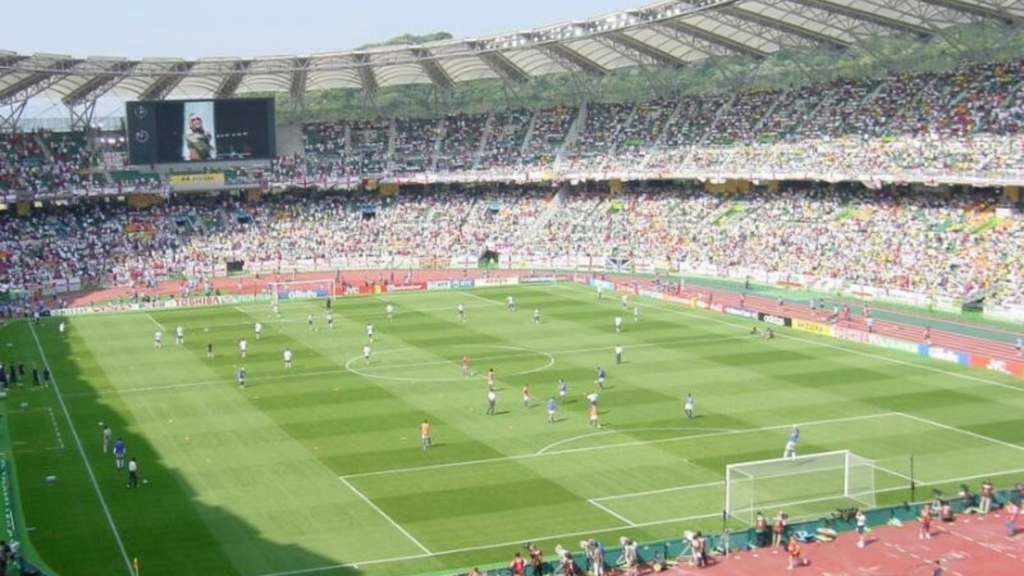
FIFA-approved World Cup fields typically measure:
- Length: 100–110 meters
- Width: 64–75 meters
The playing surface must meet strict FIFA standards to ensure fairness and player safety.
What Is a “Group of Death”?
A “Group of Death” refers to a group containing several elite football teams.
Examples often include multiple former champions or highly ranked nations competing against each other in the group stage.
These groups are known for:
- Tough competition
- Unexpected eliminations
- High drama
Fans and media eagerly watch these groups during every World Cup tournament.
What Is the Women’s Worlds of Soccer?
The Women’s Worlds of Soccer refers to the FIFA Women’s World Cup.
The tournament showcases the best women’s national teams from around the globe.
It has become one of the fastest-growing sporting events in the world and attracts millions of viewers.
Women’s football continues to experience record-breaking growth in popularity and attendance.
Where Is the Next Women’s Worlds of Soccer?
The next FIFA Women’s World Cup will continue the growth of women’s football worldwide.
FIFA regularly rotates hosting rights among different regions to promote global development of the women’s game.
Fans can expect elite competition featuring the world’s best female footballers.
When Is the World Cup Draw?
The World Cup Draw takes place before the tournament begins.
The draw determines:
- Group assignments
- Team placements
- Potential knockout paths
Millions of fans watch the event because it shapes the entire tournament structure and reveals possible “Groups of Death.”
Countries That Have Won the Soccer World Cup (1930–2022)
Since the inaugural tournament in 1930, only a select group of nations have earned the honor of becoming FIFA World Cup champions.
| Country | World Cup Titles |
|---|---|
| Brazil | 5 |
| Germany | 4 |
| Italy | 4 |
| Argentina | 3 |
| France | 2 |
| Uruguay | 2 |
| England | 1 |
| Spain | 1 |
Brazil remains the most successful nation in World Cup history, while Argentina entered the 2026 cycle as the defending champions after winning the 2022 FIFA World Cup in Qatar.
Interesting World Cup Facts
The FIFA World Cup has produced countless memorable moments, records, and achievements throughout its history.
The World Cup Is the Most-Watched Sporting Event
More than 1.5 billion fans watched the 2022 FIFA World Cup Final, making it one of the most viewed sporting events in history.
Brazil Has Played in Every World Cup
Brazil is the only country to participate in every FIFA World Cup tournament since 1930.
The Fastest Goal in World Cup History
One of the fastest goals in World Cup history was scored by Hakan Şükür of Turkey against South Korea in 2002 after only 11 seconds.
The Largest World Cup Ever
The FIFA World Cup 2026 will be the largest tournament ever held with:
- 48 national teams
- 104 matches
- 12 groups
- 3 host countries
The First World Cup Trophy
The original trophy was known as the Jules Rimet Trophy, named after the FIFA president who helped create the tournament.
Most Successful World Cup Player
Several legendary players have left their mark on World Cup history, including Pelé, Diego Maradona, Zinedine Zidane, Ronaldo Nazário, Lionel Messi, and many others.
Estadio Azteca Makes History
Mexico City’s Estadio Azteca is set to become the first stadium to host matches in three different FIFA World Cups.
2026 World Cup Ticketing Notice
Tickets for the FIFA World Cup 2026 will be released in phases.
Fans should be cautious of unofficial ticket sellers and only purchase tickets through authorized channels.
Ticketing Tips
- Register early for ticket updates.
- Follow official FIFA announcements.
- Purchase through approved platforms only.
- Book accommodation and travel arrangements in advance.
- Monitor ticket release dates regularly.
Demand for World Cup tickets is expected to be extremely high due to the tournament’s size and popularity.
Connect
Football fans can stay connected throughout the tournament by following:
- Official FIFA announcements
- Team news and squad updates
- Match schedules
- Tournament standings
- Live scores
- Ticketing information
Staying informed helps fans enjoy the complete World Cup experience.
Discover
The FIFA World Cup is more than just a soccer tournament.
It is an opportunity to discover:
- New cultures
- Historic cities
- Famous stadiums
- International football traditions
- Passionate fan communities
The 2026 tournament across Canada, Mexico, and the United States will provide one of the most diverse World Cup experiences ever.
Roadtrips
Many supporters plan sports travel experiences around the World Cup.
Popular activities include:
- Visiting multiple host cities
- Stadium tours
- Fan festivals
- Team training sessions
- Local cultural attractions
Because the tournament spans North America, fans will have the opportunity to combine football with unforgettable travel experiences.
Planning transportation and accommodation early is highly recommended.
Why the 2026 World Cup Will Be Historic
Several factors make the FIFA World Cup 2026 unique:
First Tournament Hosted by Three Nations
Canada, Mexico, and the United States will jointly host the event.
Expanded Tournament Format
The new 48-team structure creates more opportunities for nations worldwide.
Record Number of Matches
A total of 104 matches will be played.
New Football Markets
The tournament will further accelerate soccer’s growth in North America.
Bigger Global Audience
The expanded format is expected to attract record-breaking television and streaming audiences.
Final Thoughts
The FIFA World Cup remains the most prestigious event in international football. Since the inaugural tournament in Uruguay in 1930, the competition has united nations, inspired generations of players, and created some of the most unforgettable moments in sports history.
As we look ahead to the FIFA World Cup 2026, fans can expect the biggest and most exciting edition ever staged. With 48 national teams, 104 matches, world-class stadiums, and host cities across Canada, Mexico, and the United States, the tournament promises to deliver incredible action from the opening match to the World Cup final match.
Whether you are interested in World Cup history, the qualification process, host cities, the tournament format, or future ticketing opportunities, this World Cup Ultimate Guide provides a strong foundation for understanding football’s greatest competition.
Bookmark this guide and return regularly for updates as the road to World Cup 2026 continues.



3 Comments